What is Voice AI Agent? Definition, Features, Benefits, Usecases and Examples
Stop losing customers to long hold times. Discover how an AI voice agent transforms telephone support and scales your enterprise operations instantly.





For decades, the phone experience meant navigating frustrating IVR menus or waiting on hold for an overworked human agent. In 2026, the AI voice agent has transformed this dynamic entirely, replacing static phone trees with intelligent real-time conversations that resolve issues.
The numbers reflect this shift clearly. The global voice AI agent market was valued at $2.4 billion in 2024 and is projected to reach $47.5 billion by 2034, growing at a CAGR of 34.8%. This growth is driven by businesses that demand faster, more scalable communication infrastructure.
An AI voice agent has now become a critical operational asset across industries. From scheduling doctor appointments to qualifying sales leads, these agents handle millions of interactions daily with human-level fluency and zero fatigue.
Understanding how to implement them effectively requires looking past the hype. This guide provides a comprehensive AI voice agent definition, covering its features, benefits, use cases, and real-world applications across industries.

What is an AI Voice Agent?
An AI voice agent is an AI-powered system that communicates in real-time via spoken language. It uses natural language processing and speech synthesis to understand callers, respond accurately, and complete tasks autonomously.
An AI voice agent uses speech synthesis and natural language understanding to hold real-time spoken conversations. Consider the example of a patient calling a hospital: the agent greets the caller, understands the medical concern, and books an appointment slot, all without human involvement.
The agent also connects directly to backend systems to perform tasks like booking appointments or processing refunds, without requiring any human assistance. This backend integration is what separates a true AI voice agent from a basic interactive voice menu.
The result is 24/7 customer support that handles unlimited concurrent calls without fatigue or rising wait times. Whether it is 2 AM or the middle of a peak business period, the agent delivers the same responsive and accurate experience on every single call.
How Does an AI Voice Agent Work?
Every AI voice agent processes spoken interactions through three sequential technical layers, converting speech to action in under a second.
- Speech-to-Text (ASR): The system captures the caller's spoken audio and transcribes it into text within milliseconds. It filters out background noise and handles diverse accents with high accuracy, ensuring the input is clean before processing begins.
- Large Language Model (NLP+LLM): The AI then processes the transcribed text, determines the caller's intent, and generates a contextually appropriate response. It draws from a configured knowledge base and connected business systems to ensure the reply is accurate and relevant.
- Text-to-Speech (TTS): The generated response is converted back into human-like audio using ultra-realistic voice synthesis technology. The output is delivered to the caller in a natural, fluid tone that closely mirrors a real human conversation.
Executing these technical steps successfully requires the software to maintain exceptional processing speed during live calls. End-to-end latency under 500 milliseconds makes conversations feel natural. Above 800 milliseconds, call abandonment rates rise significantly due to noticeable lag.
What Are the Core Features of a Modern AI Voice Agent?
When evaluating AI voice agents for your business operations, you must look for specific technical capabilities. The most effective AI calling agents possess advanced features that guarantee a superior customer experience.
- Low-Latency Interruption Handling: The best AI voice agents handle mid-sentence interruptions naturally, stopping immediately when a caller speaks over them. This behavior removes the robotic, one-sided feel from automated calls and significantly improves overall caller satisfaction.
- Context Retention: Voice AI agent features must include conversational memory, allowing the agent to recall information shared earlier in the same call. A caller should never have to repeat their account number, address, or issue a second time.
- Sentiment Analysis: Modern agents detect frustration or distress in a caller's voice and escalate the interaction to a human agent at the appropriate moment. This capability protects customer relationships during high-stakes or emotionally charged conversations.
- Multilingual Support: Enterprise-grade agents seamlessly switch between languages, serving international customers without routing delays or additional configuration. A single-agent deployment can effectively support dozens of regional markets from a single platform.
The capabilities listed above represent the standard that any production-grade deployment must meet. However, if you are still shortlisting platforms, this guide to the best AI voice assistants for enterprises is a useful starting point.
What Are the Key Benefits of Using AI Voice Agents?
Implementing an AI voice agent provides immediate strategic advantages, transforming how startups manage their daily operational challenges.
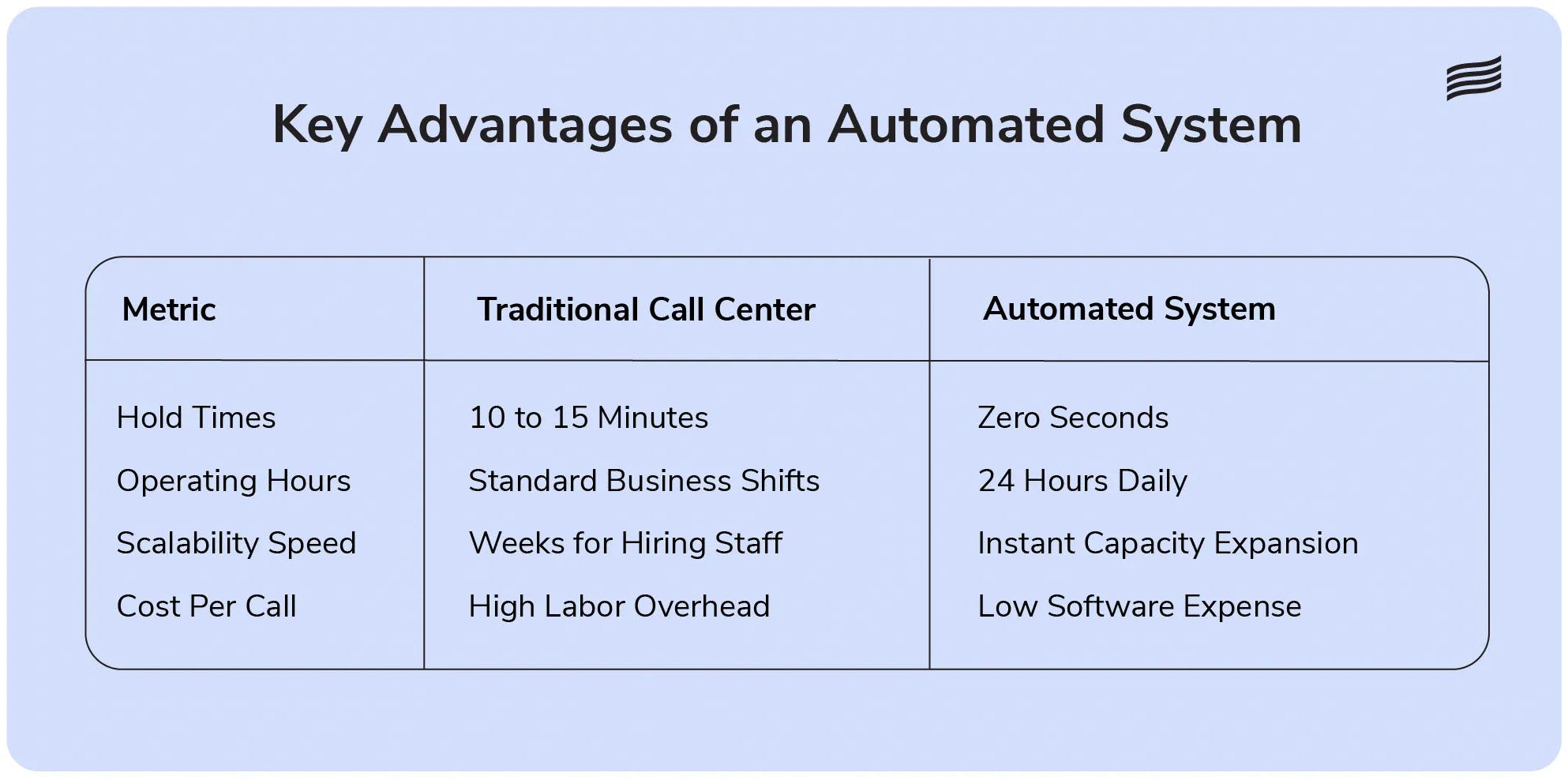
- Zero Wait Times: Customers receive instant answers to their inquiries to eliminate the frustration of long hold queues. This immediate response mechanism improves overall brand perception and prevents prospect abandonment during peak business hours and holidays.
- Cost Efficiency: Automated AI calling agents operate at a fraction of the cost associated with maintaining human staff. Deploying this software reduces the overall cost-per-contact by up to eighty percent for large enterprise organizations globally.
- Consistent Quality: Every customer receives the exact same high standard of polite and highly accurate automated service. The software follows business protocols flawlessly, regardless of the time of day or the current volume of incoming calls.
- Infinite Scalability: Businesses handle thousands of concurrent telephone calls simultaneously during sudden and massive marketing spikes. This scalability allows companies to capture every lead without hiring temporary staff or expanding their physical call center infrastructure.
Top AI Voice Agent Use Cases for Business
The most effective AI voice agent use cases focus on high-volume, repetitive call tasks where speed and consistency create the greatest measurable value for both the business and the customer.
- Inbound Customer Support: AI voice agents handle incoming queries around the clock, answering FAQs, checking order status, and resolving basic technical issues without human involvement. This reduces the support team's workload and significantly improves first-contact resolution rates.
- Outbound Sales Qualification: AI voice agents engage new leads within seconds of a form submission, qualify their interest and budget, and schedule meetings directly with human closers. Response speed at this stage of the sales funnel directly impacts conversion rates.
- Appointment Scheduling: Healthcare clinics, salons, and service businesses use AI voice agents to manage bookings, send reminders, and handle rescheduling requests without manual data entry. Calendar accuracy improves, and no-show rates decrease with automated follow-up calls.
- Debt Collections: AI voice agents send empathetic and compliant payment reminders and negotiate structured repayment plans with customers in real-time. The tone consistency and regulatory compliance built into these interactions reduce disputes and improve overall collection outcomes.
Real-World AI Voice Agent Examples
Seeing an AI voice agent example in practice makes the technology's value concrete. Across healthcare, logistics, real estate, and recruitment, businesses are deploying these agents to automate high-volume calls that previously demanded entire teams.
- Healthcare Intake: A busy clinic uses an AI voice agent to screen incoming patient symptoms carefully. It verifies insurance coverage details and books available time slots to reduce the administrative workload for the front desk staff.
- Logistics Coordination: A national trucking company uses automated voice systems to call drivers for regular status updates. This ensures real-time tracking accuracy for clients while keeping the dispatchers focused on routing and major logistical challenges.
- Real Estate Lead Gen: A property agency uses an AI voice agent to call new website leads instantly. It carefully reviews their budget parameters and preferred moving timeline before involving a licensed realtor in the final property sale process.
- Hiring: A corporate recruiter uses automated systems as the first point of contact with new candidates. The software reaches out to gather basic background information and to clarify initial applicant queries about the open job position.

Why Teams Choose Ringg AI to Build Voice Agents
While understanding the technology remains important, the AI voice agent platform you choose to build on matters significantly more. Ringg AI represents the Voice Operating System designed precisely for achieving true enterprise operational excellence.
Here are the key features that make us the best platform for developing AI voice agents:
- Flash Latency (<400ms): In voice automation, conversational speed builds user trust. The Ringg AI architecture is optimized specifically to deliver sub-400ms response times consistently. This ensures the software feels like a helpful human and eliminates frustrating conversational lag entirely during calls.
- Glass Box Transparency: We provide complete visibility for your operational data. Ringg AI offers full access into every call log, audio recording, and routing decision your system makes. You have total control to audit these interactions and improve performance metrics instantly.
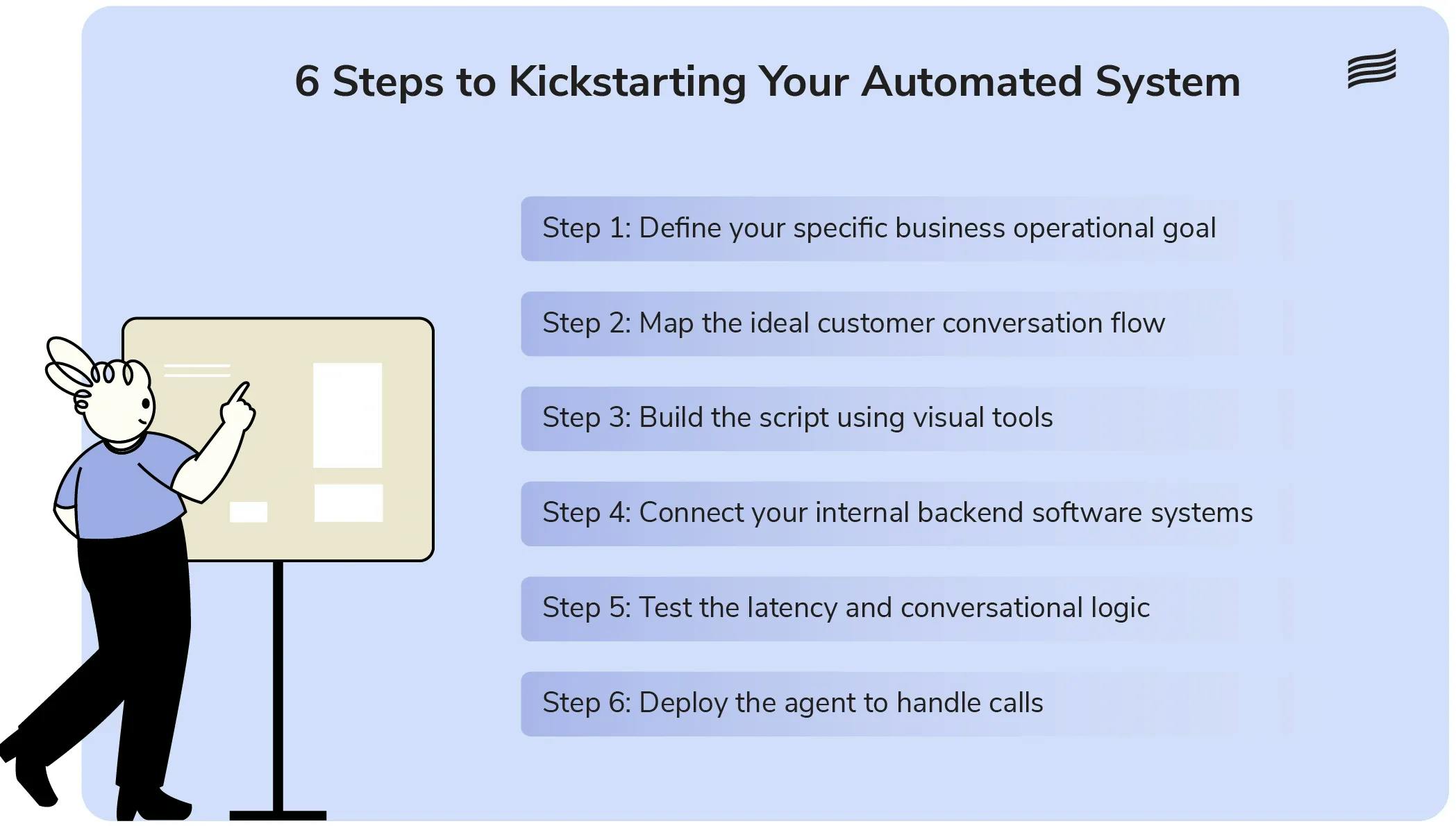
- No-Code Visual Builder: Operations managers can launch a conversational system independently. Our intuitive visual builder allows your teams to create complex logic flows, update conversation scripts, and modify agent behaviors in a matter of minutes to ensure high operational agility.
- Native Telephony: We bundle the robust carrier infrastructure directly with the artificial intelligence software. You receive clear and reliable calling capabilities instantly while bypassing separate telecom vendor contracts and ensuring high connection quality for your valuable customer service telephone calls.
Final Thoughts: Is Your Business Ready for Voice AI?
Is it time to upgrade your company communication systems? The AI voice agent meaning translates to complete operational transformation for modern businesses. Companies that adopt this technology today are seeing immediate improvements in customer satisfaction scores and overall operational efficiency across their entire support organization.
Executing this strategy effectively requires a thoughtful approach and the right technological partner. You need a reliable platform that prioritizes ultra-low latency, carrier-grade reliability, and complete ease of use to ensure your automated interactions remain seamless and highly professional.
Ringg AI offers the robust infrastructure you need to deploy a conversational system that actually works for your business. Our comprehensive platform empowers your operations team to create intelligent automated conversations that drive revenue and enhance brand loyalty.
Ensure your valuable customers receive immediate assistance at all times. Book a free Ringg AI demo today to get started.
Frequently Asked Questions
An automated system conducts spoken conversations over the telephone using advanced speech recognition and vocal synthesis. A traditional chatbot relies entirely on typed text interactions through a website interface. The voice system must process audio signals and respond with ultra-low latency to maintain natural dialogue.
Related Articles
Manual vs Automated Calls in Startups: The Real Cost
Manual vs automated calls in startups: which saves more time & money? See data, real cases, & why founders switch to Ringg AI for call automation.
Startup Challenges (And How Voice AI Resolves Them)
Learn how voice AI helps solve startup operational and growth challenges by replacing manual fixes and chaos with scalable, intelligent systems.
5 Benefits Of Integrating Voice AI with Zapier Automation
Discover how to automate customer interactions using Voice AI with Zapier. Explore proven use cases, including lead follow-up, order confirmations, and appointment reminders that save time and boost engagement.