Startup Challenges (And How Voice AI Resolves Them)
Learn how voice AI helps solve startup operational and growth challenges by replacing manual fixes and chaos with scalable, intelligent systems.

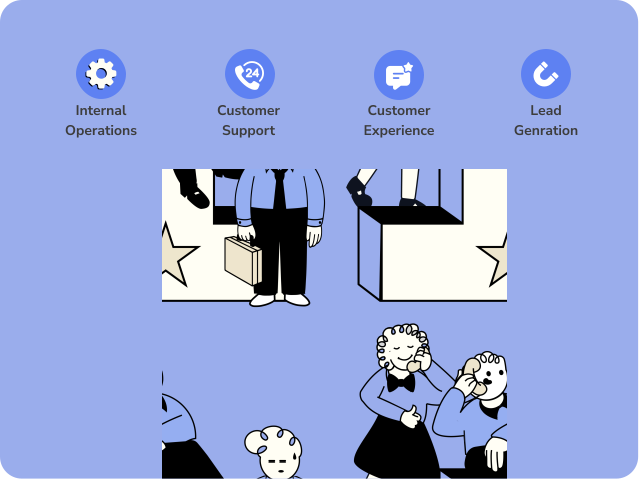



Scaling a startup requires more than acquiring users or raising funds. The real struggle comes in keeping operational systems running smoothly as demand grows. Most startups don't fail because of dramatic, obvious problems. They struggle with startup operational challenges that slowly drain resources and frustrate customers. Below, we break down key areas where startups often stumble, and highlight startup growth challenges to address early.
These challenges appear across every customer touchpoint, from onboarding to customer service to sales. And the good news? Many of these problems have clear solutions; artificial intelligence and automation tools like Ringg AI can handle much of the heavy lifting while teams focus on strategic work.
But before we get into the challenges in detail, here’s a quick summary table:
| CHALLENGE | WITHOUT VOICE AI | WITH VOICE AI |
|---|---|---|
| Customer Onboarding | Rigid, generic flows causing high churn. | Instant, personalized, multilingual guidance. |
| Customer Experience | Inconsistent brand voice; lack of context. | Consistent persona; remembers user history. |
| Customer Support | Slow responses; robotic, non-empathetic automation. | Instant 24/7 empathetic, human-like support. |
| Customer Feedback | Low response rates; survey fatigue. | Natural conversational feedback; automated exit interviews. |
| Sales & Qualification | Slow manual response; missed time-zone opportunities. | 24/7 automated qualification and nurturing. |
| Operations | Info silos; context loss during team handoffs. | Auto-captures full history for seamless transitions. |
Customer Onboarding: Where Growth Stalls Before It Begins
Startups pour resources into user acquisition, but onboarding determines whether those users actually stay. Startup operational challenges like poor onboarding ranks as the third most important reason for churn, sitting right behind product-market fit and engagement issues.
- Generic onboarding sequences kill conversion rates fast. When every new user gets the same email series and tutorial flow, confusion follows. A project manager signing up for team collaboration features doesn't need a walkthrough of individual productivity tools. Different user types need different guidance paths to improve user satisfaction
💡Quick Fact: Slack revolutionized user onboarding by creating adaptive flows that adjust based on team size and use case. Instead of one-size-fits-all tutorials, they guide users through relevant features based on their specific goals, achieving 93% daily active usage among paying customers.
- Fragmented progress tracking creates operational chaos. User data gets scattered across email platforms, in-app messaging systems, support tickets, and CRMs. Teams can't see who's stuck where, leading to startup growth challenges like duplicated outreach efforts and users slipping through cracks entirely.
- Language barriers block new markets and global expansion plans. Running English onboarding through translation tools isn't localization, it's a recipe for confused international users. Cultural nuances and region-specific business practices require thoughtful adaptation and strict adherence to regulatory compliance.
- Delayed pattern recognition means missing critical drop-off signals. By the time teams notice 40% of users abandoning setup at step three, hundreds of potential customers have already left. Real-time monitoring catches these startup growth challenges as they develop, not weeks later in monthly reports.
Also Read - Voice AI for Banking Customer Experience

How Voice AI Solves Onboarding Problems
Voice-first automation transforms onboarding from static sequences into dynamic conversations using advanced speech recognition. Instead of generic tutorials, users get personalized guidance based on their specific responses and goals. The system can ask clarifying questions, provide relevant examples, and adapt the flow in real-time.
Multilingual support becomes scalable through voice AI that handles dozens of languages naturally. Users can ask questions in their preferred language and get immediate, contextually relevant responses. Progress tracking happens automatically as the system logs every interaction and identifies exactly where users need additional help.
For sudden traffic spikes, voice automation solves these operational challenges in startups by scaling instantly without overwhelming human teams. The system handles routine setup questions while flagging complex cases for human intervention.
Also read: Finance AI Agent
Customer Experience: Managing Interaction, Consistency and Trust
User experience quality determines long-term retention, but maintaining consistency becomes nearly impossible as teams grow across regions and time zones.
- Inconsistent brand voice confuses customers. When US support teams use casual language while European teams maintain formal professionalism, users notice.
- 87% of customers agree that companies should be putting more effort into delivering a consistent experience. (Zendesk)
- Lack of personalization at scale frustrates users who expect contextual interactions. When customers must re-explain their situation with every contact, satisfaction drops quickly.
- 58% of customers say that it is absolutely crucial that they receive a personalized experience when interacting with a brand/company. (Salesforce Research)
- Complex query bottlenecks overwhelm human support teams. Technical questions about API integrations or custom workflows require specialized knowledge that most agents lack. Teams either hire expensive data scientists or risk providing inadequate responses.
- Peak load management failures are one of the startup operational challenges that damage trust during critical moments. Product launches, outages, or viral growth create support avalanches that turn careful response time targets into hours-long delays.
How Voice AI Solves Growth Challenges
Voice AI maintains a consistent brand personality across all interactions while adapting tone based on customer context and emotional state. The system can sound professional for enterprise clients and friendly for casual users, but always within defined brand guidelines.
Personalization happens through context-aware conversations that remember previous interactions, user preferences, and account history. Customers don't repeat basic information because the system maintains continuity across touchpoints.
For complex queries, voice automation can solve hidden startup operational challenges like these by gathering detailed context before routing to appropriate specialists, ensuring human agents have complete background information. Simple technical questions get resolved immediately through conversational interfaces that feel natural.
During peak loads, voice AI resolves these startup growth challenges by scaling support capacity instantly while maintaining response quality. The system handles routine inquiries and escalates only cases requiring human expertise.
Customer Support: Where Every Interaction Counts
💡Quick Fact: Color Genomics struggled when genetic testing demand spiked, overwhelming support with complex medical questions. Their small team couldn't provide timely responses without proper AI assistance, until implementing automated triage systems.
Support interactions directly impact customer loyalty and retention.
80% of consumers would agree that when a company responds immediately when they reach out for help, it influences their loyalty. (Salesforce Research)
- Response time pressure creates startup growth challenges like impossible staffing decisions. Teams either over-hire for peak periods or accept that customers wait during busy times. Both options hurt profitability.
- Empathy gaps in automated responses make AI support feel cold and impersonal, leading to generic responses to frustrated customers that often escalate situations rather than resolving them. This is often the biggest challenge in the early stages of automation.
- Self-service abandonment wastes knowledge base investments. Users bypass carefully crafted FAQ sections and documentation, defaulting to human support for questions with documented answers.
- Context loss between interactions forces customers to repeat information multiple times and this can cause hidden startup operational challenges when different agents handle follow-up conversations, continuity breaks down and frustration builds.
How Voice AI Transforms Customer Support
Voice AI resolves startup growth challenges by providing immediate responses while maintaining human-like empathy through natural language processing that recognizes emotional context. The system can acknowledge frustration, express understanding, and adapt its communication style accordingly.
For self-service optimization, voice interfaces guide users through knowledge bases conversationally. This solves a number of hidden startup operational challenges because instead of searching through articles, customers describe their problems and get direct answers with relevant follow-up questions.
Context preservation happens automatically as voice systems maintain complete conversation histories and account contexts. Every interaction builds on previous exchanges, eliminating repetitive explanations.
Resource allocation becomes dynamic through AI that handles routine inquiries during off-hours and scales support capacity based on real-time demand patterns. By leveraging how voice AI solves growth challenges, human agents can then focus on complex problems requiring creativity and relationship-building skills.
Customer Feedback: Learning Without Annoying
Feedback collection requires balancing valuable insights with user experience. Most approaches either overwhelm users with surveys or fail to generate actionable intelligence.
- Survey fatigue kills response rates. Users ignore lengthy questionnaires and abandon rating requests after every interaction. Traditional feedback methods interrupt workflows at inconvenient times.
- Fragmented feedback analysis prevents comprehensive insights. Comments spread across support tickets, app reviews, sales calls, and survey responses create analysis paralysis. Teams can't see complete pictures without manual data consolidation.
- Startup growth challenges like silent churner blindness represent the biggest insight gap. Customers who quietly cancel subscriptions often hold the most valuable feedback, but traditional outreach methods don't reach them effectively.
💡Quick Fact: Notion improved retention by implementing contextual feedback collection that feels conversational rather than survey-driven. They capture user sentiment through natural interactions within the product, identifying potential churn signals before users become silent and addressing concerns proactively.
- Also, hidden startup operational challenges like broken feedback loops discourage future participation. When users provide thoughtful input but see no acknowledgment or improvements, they stop engaging with feedback requests entirely.
How Voice Automation Improves Feedback Collection
Voice interfaces collect feedback through natural conversations that feel like discussions rather than surveys. Users can share detailed thoughts without structured forms, and the system extracts key insights through intelligent analysis.
Real-time feedback processing identifies patterns and sentiment immediately. Instead of waiting for monthly reports, teams get instant alerts about emerging issues or improvement opportunities.
For churned customers, voice AI solves startup growth challenges like this by conducting exit interviews through personalized outreach that feels consultative rather than pushy. The conversational approach often generates responses that written surveys can't capture.
Feedback loop closure happens automatically through systems that acknowledge user input and provide updates on resulting changes. Users see their suggestions matter, encouraging continued participation.
Sales & Lead Qualification: Converting Without Burning Out
Manual sales processes introduce delays and inconsistencies that cost conversions. As lead volume grows, operational challenges in startups could arise as teams struggle to maintain personalized engagement without burning out.
- Cross-timezone response gaps lose qualified prospects. When sales teams finish work, potential customers in other regions could just be starting their day, resulting in competitors often making first contact.
- Prospect qualification inefficiency wastes time on unqualified leads while qualified prospects wait for attention. This leads to startup growth challenges as teams lack systematic approaches to gauge buying intent and budget fit.
- Cold lead nurturing breakdown happens when manual touchpoints can't scale. Personalized outreach works for dozens of prospects but slowly becomes one of the startup growth challenges as personalized outreach becomes impossible with hundreds or thousands.
- Timing optimization challenges mean missing optimal conversion windows. Without real-time engagement signals, teams guess when prospects are ready for sales conversations.

How Voice Automation Accelerates Sales
Voice AI enables 24/7 lead qualification through conversational interfaces that feel consultative rather than scripted. This solves startup operational challenges as prospects can describe their challenges in natural language while the system qualifies budget, timeline, and decision-making authority.
Cross-timezone coverage happens automatically through voice systems that handle initial inquiries and schedule appropriate follow-ups with human sales teams. This solves some of the startup growth challenges as qualified leads never have to wait for business hours.
Cold lead nurturing scales through personalized voice messages that reference specific prospect interests and previous interactions. This drastically fixes some of the operational challenges in startups as the system maintains engagement without overwhelming prospects or sales teams.
Engagement timing optimization uses behavioral signals to identify when prospects are actively researching solutions. Voice AI can initiate conversations at optimal moments while human agents focus on closing qualified opportunities.
Internal Operations: Scaling Without Chaos
Internal operational efficiency directly impacts customer-facing performance. As teams grow and distribute across locations, startup growth challenges arise and coordination becomes increasingly complex.
- Team handoff failures create customer experience gaps. When marketing generates leads, sales qualifies them, onboarding takes over, and support handles issues, startup operational challenges may arise and each transition risks dropping important context.
💡Quick Fact: HubSpot solved internal coordination challenges by building integrated systems that automatically pass context between marketing, sales, and support teams. Their unified platform eliminated information silos and reduced customer onboarding time by 40% while improving team productivity.
- Documentation gaps create knowledge bottlenecks. Critical customer information lives in individual team member memories rather than accessible systems. Vacations and employee transitions risk service disruptions.
- Training inefficiencies slow new team member productivity. Without structured onboarding approaches, experienced staff split attention between their own work and training responsibilities, leading to hidden startup operational challenges.
- Automation governance challenges require balancing efficiency with quality. Over-relying on automated systems without oversight creates startup operational challenges like service gaps, while under-utilizing automation, causing human potential to go to waste on repetitive tasks.
How Voice Automation Streamlines Internal Operations
Voice AI facilitates seamless team handoffs by capturing complete interaction histories and customer contexts automatically. When leads move from marketing to sales to onboarding, all relevant information transfers without manual note-taking.
Knowledge management becomes conversational through voice interfaces that let team members quickly access customer histories, product information, and process documentation. Instead of searching through multiple systems, staff can ask questions and get immediate answers.
Training acceleration happens through voice-guided onboarding that adapts to individual learning pace and knowledge gaps. Now that you know how voice AI solves operational problems, your new team members can practice scenarios and get immediate feedback without consuming senior staff time.
Quality governance becomes systematic through voice AI that solves hidden startup operational challenges by maintaining consistent service standards while flagging unusual situations for human review. Teams get automation benefits with appropriate oversight.
When Automation Creates Strategic Advantage
Other than solving operational problems, smart automation also creates competitive advantages by freeing human teams for high-value work. The key lies in choosing which tasks to automate and which require human creativity and judgment.
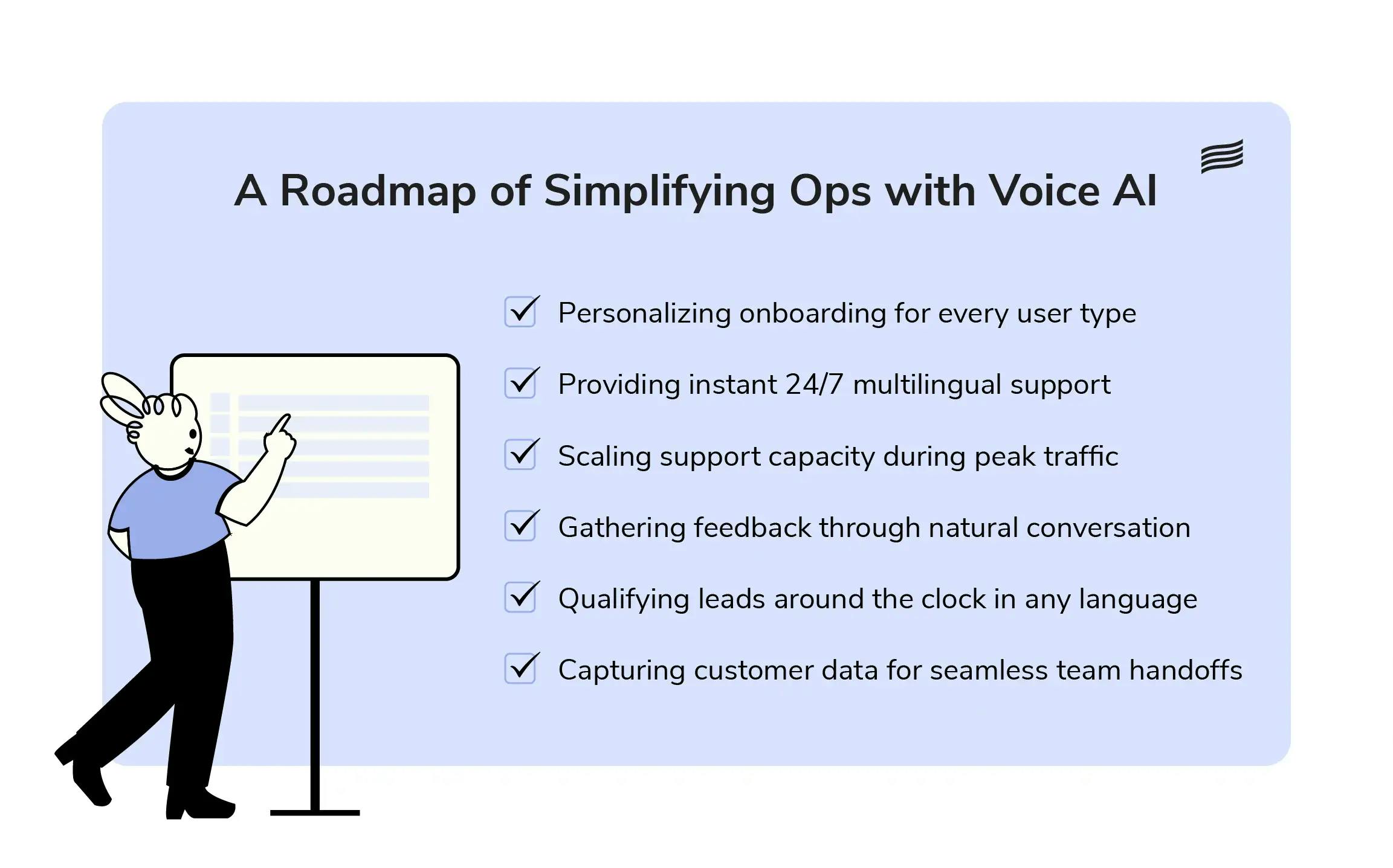
- Voice-first solutions show particular promise because they feel natural to users while handling complex scenarios. Unlike chatbots with limited response options, voice AI engages in open-ended conversations that adapt to user needs dynamically.
- Scalability without proportional cost increases becomes possible when automation handles routine interactions. Teams can grow customer bases without equally growing support staff, improving unit economics significantly.
- 24/7 availability stops being a staffing challenge when AI provides consistent service quality across all time zones. Voice AI solves operational problems like availability by making sure customers get immediate help regardless of when they need it.
- Data integration and insights happen automatically when voice systems connect to existing business tools. Instead of manual reporting, teams get real-time dashboards showing customer sentiment, operational bottlenecks, and improvement opportunities.
- Multilingual expansion becomes feasible without hiring native speakers for every target market. Voice AI solves these operational challenges in startups by handling dozens of languages while maintaining brand voice and cultural sensitivity.
The goal isn't replacing human judgment with automation; it's creating space for teams to focus on strategy, relationship building, and innovation. When routine operational tasks run smoothly in the background, human creativity can drive business growth instead of fighting daily fires.
Building Operational Resilience
Startups face compounding operational challenges that must be addressed early to prevent growth-limiting crises. Voice automation offers a powerful solution by merging AI scalability with natural, human-like interaction, allowing users to resolve issues in their own words while receiving personalized support.
By automating routine complexity, startups gain the "breathing room" needed to move from merely surviving to thriving. This efficiency creates a sustainable competitive advantage, ensuring high customer satisfaction while freeing up human talent to focus on innovation rather than just keeping the lights on.
If you're exploring ways to prepare your startup for growth, book a demo with Ringg AI to see how our trusted AI voice agents help achieve that.
We don't pitch AI hype.
We deliver business outcomes.
Frequently Asked Questions
AI helps startups by transforming manual workflows into automated engines that solve startup growth challenges, allowing lean teams to reach global users without massive labor costs. This lets founders focus on strategy while AI handles tasks that typically stall growth.
Related Articles
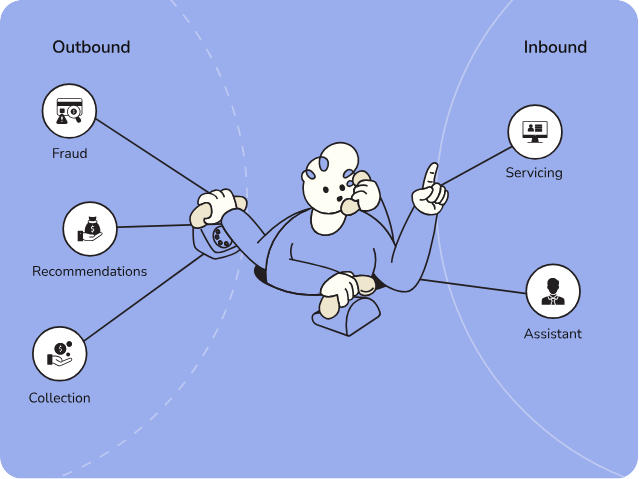
Voice AI For Banking Customer Experience: Top 5 Use Cases
Discover proven voice AI use cases for banking like fraud alerts and servicing to boost efficiency.

How Ringg AI Agent for Lead Qualification Transforms Businesses
See how Ringg AI acts as a lead qualification agent for businesses, screening prospects via natural calls & filtering out cold leads.
The Smarter Way to Scale with AI Sales Outreach
Smarter AI sales outreach beats traditional hiring. Discover how to scale sales outreach with AI without the overhead of a massive team.