Ringg City 26th Edition
Did this CEO just compare AI to COVID?
RINGGCity
By RINGG AI
RINGGCity
By RINGG AI
Happy Friday and welcome back to RinggCity!
In the spirit of Valentine's week, Elon Musk seems ready to take Al to the Moon and back (quite literally!) as ambitions around infrastructure and manufacturing leave the planet behind.
At the same time, CEOs are comparing Al's impact on jobs to Covid, and markets are watching closely as Chinese Al stocks surge, raising fresh comparisons with US tech giants and reshaping the competitive narrative.
Like always, we're bringing you the latest scoop in the tech biz.
Let's get into it!
-Team Ringg
This week's
3 Big Questions.

Is Elon Musk’s lunar factory plan the next frontier for AI infrastructure?
Elon Musk is looking at building manufacturing capabilities on the Moon, showing how far tech ambitions are stretching as AI and advanced computing demand industrial scale.
Is AI’s impact on jobs about to be bigger than Covid?
A CEO has warned that artificial intelligence could disrupt employment on a scale larger than the pandemic, accelerating automation across sectors and forcing companies and workers to adapt faster than ever.
Are surging Chinese AI stocks challenging the dominance of US tech giants?
A rally in major Chinese AI companies has reignited comparisons with US leaders, as investors bet that China’s ecosystem could narrow the gap in model development, chips, and large-scale deployment.
Humour Box
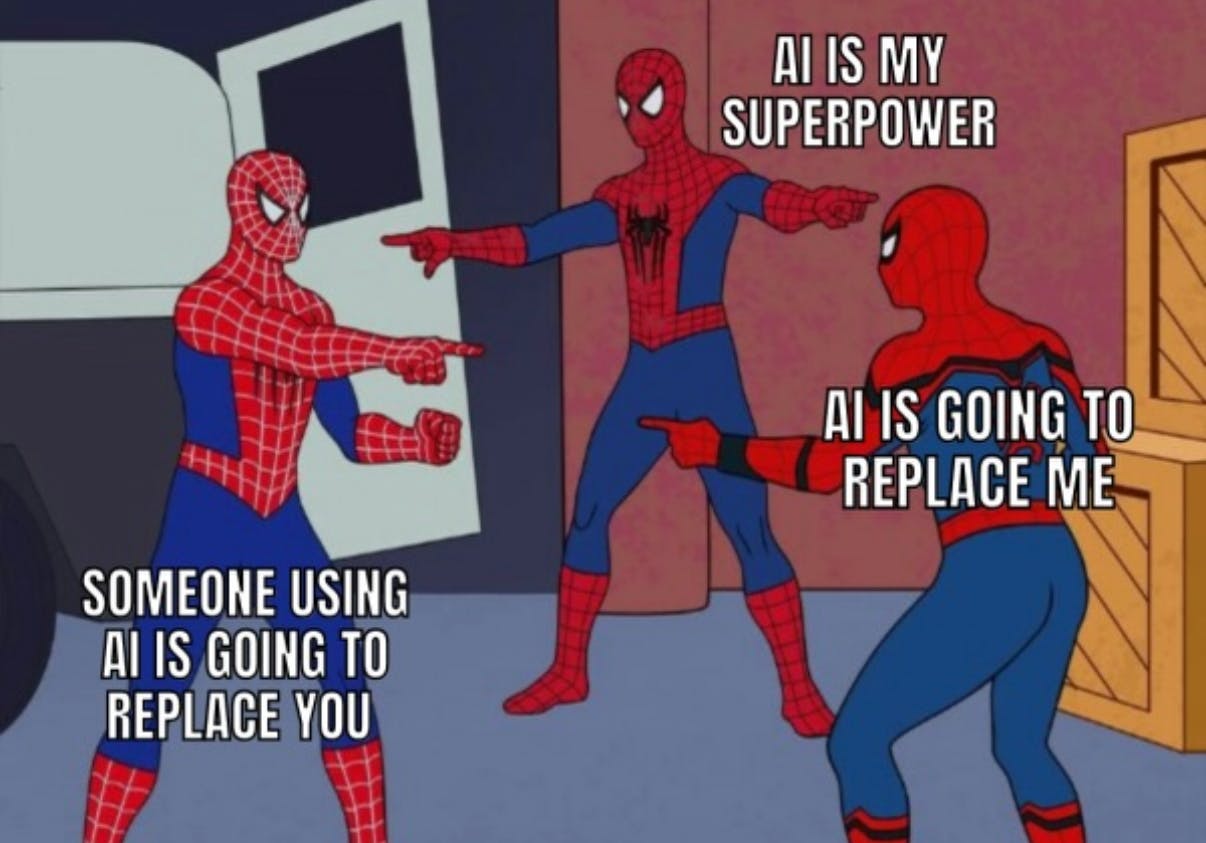
A founder shared that their AI now handles customer support tickets, internal research, and first drafts of strategy docs. “We no longer need junior hires,” they wrote.
Applications for “Senior AI Supervisor” opened immediately.
Quick Bytes

Prompt
“Act as my Chief of Staff. Based on this week’s goals, what should I say no to?”
A practical filter for founders and operators drowning in optional urgency.

AI Jargon
Covariate Shift
When the data a model sees in the real world differs from the data it was trained on, leading to unexpected performance drops even though nothing “broke.”

Reccos
Read: Range by David Epstein
A compelling case for generalists in a world obsessed with specialization. Especially relevant in AI and tech, where cross-domain thinking often beats narrow expertise.

Bonus Byte
Threads rolled out “Dear Algo,” a feature that lets users directly tell the algorithm what they want to see more or less of. The feed is no longer just learning from you. You are now explicitly training it back.
Tool Bench

Glide
What it is:
A no-code platform that turns spreadsheets into fully functional internal tools and lightweight apps without needing engineering resources.
How you can use it:
Connect it to a Google Sheet or database and build custom dashboards, CRMs, inventory trackers, or approval systems in hours. Share securely with your team and update logic on the fly.
Good for you if:
You’re an ops-heavy startup or small team constantly building scrappy internal systems and want to ship tools fast without filing engineering tickets.
Ringg Lens
When Disruption Feels Familiar
Hyperwrite CEO Matt Shumer recently compared AI to Covid owing to its scale and speed. During the pandemic, entire industries were forced to adapt overnight. According to the warning, AI could create a similar shock to employment, but in a more systematic way. Instead of temporary shutdowns, AI could permanently reduce the need for certain roles, automate repetitive and mid-level tasks, and compress teams that once required large human workforces. The concern is not just job loss, but the velocity at which skills may become obsolete.
What Ringg Thinks
The comparison works because it highlights preparedness. Covid exposed how fragile systems can be under rapid change. AI presents a quieter disruption. Companies adopt it to improve margins and efficiency, not because they are forced to. That makes the shift less visible but potentially more structural. The risk is not sudden collapse, but gradual displacement. The real challenge will be whether education systems, policy frameworks, and corporate strategy evolve quickly enough to absorb the change before it becomes socially destabilising.